Saturday, May 31, 2014

'Historic' Admission to SEC Won't Help JPMorgan Plaintiffs (Update 1)

JPMorgan whale story updated to include additional comments from Pritchard in last two paragraphs.

NEW YORK (TheStreet) -- JPMorgan Chase's (JPM) admission of guilt over the "London Whale" trading debacle is being hailed by some as a historic moment for the Securities and Exchange Commission under new chairman Mary Jo White, but it won't cost the bank anything in litigation tied to the matter, according to a pair of securities law experts.

In the wake of the financial crisis, the SEC has been criticized for allowing big banks to settle enforcement cases without admitting or denying guilt. In one high-profile instance in late 2011, U.S. District Judge Jed Rakoff rejected a proposed settlement between Citigroup (C) and the SEC. In his opinion, he poked fun at "the S.E.C.'s long-standing policy -- hallowed by history, but not by reason -- of allowing defendants to enter into Consent Judgments without admitting or denying the underlying allegations."

The SEC has argued banks won't admit guilt for fear of exposing themselves to massive class action liability. The result would be costly trials that would deplete the commission's budget. But new Chairman White, a former Federal prosecutor, had said publicly the SEC was rethinking its habit of allowing companies it regulates to skate away with "neither admit nor deny" settlements. She proved true to her word on Thursday when JPMorgan admitted to poor supervision of its employees leading to $6.2 billion in trading losses. JPMorgan is expected to add significantly to its litigation reserves in the third quarter, but that doesn't mean it will actually pay out that money, or that the larger reserve will be tied to the fact that the bank admitted supervisory lapses. Amanda Rose, professor at Vanderbilt Law School, doesn't believe the admission of poor supervision will ultimately lead to increased liability for the bank. That's because such an admission still falls short of fraud. "They've admitted to not having ideal internal controls and to the various sorts of supervisory/managerial failures but they haven't admitted to committing securities fraud in such a way that its obviously going to lead to devastating class action liability," Rose says. "Not to say this isn't going to lead to more litigation over these particular issues but my guess is that JPMorgan will ultimately win in that class action litigation in saying that what we've admitted to does not establish any element of your claim here." Nonetheless, Rose believes the SEC has gone some distance toward addressing its critics. "I think that this is a meatier settlement than we've seen in a lot of cases," she says. University of Michigan law professor Adam Pritchard, however, has a far dimmer view of JPMorgan's admission. "It's not significant. It satisfies what Mary Jo White needs to say that she's living up to the assurances she's making. It has some beneficial effects for the Obama administration, I suppose, because there's dissatisfaction about the outcome of the financial crisis investigations," Pritchard says. In short, Pritchard sees JPMorgan's admission as a political victory for the SEC even though it has no real teeth because it was brought under section 13 of the securities laws, relating to the need for accurate books and records rather than section 10, which relates to fraud. "The next time the House Financial Services Committee calls an SEC Commissioner up to testify about what they're doing they'll be able to say 'well, we got an admission of wrongdoing from JPMorgan,' and the chances that some congressman is going to be dissecting them on the differences between section 13 and section 10 strikes me as remote," he says. Pritchard concedes the regulatory settlement may save private plaintiffs a bit of time as they try to prove JPMorgan's leaders had fraudulent intent--something they will need to prove to win their lawsuits. However, he says, the plaintiffs "would have gotten around to this point eventually in the discovery process, and it doesn't establish any elements of their claim that they hadn't already established." -- Written by Dan Freed in New York. Follow @dan_freed

The top 5 reasons why you're broke

In the event of a financial catastrophe such as a job loss, would you be able to cover your bills and expenses for three months? What about six months? If you answered "no" to either of these questions, you fall into the same category as around half of Americans. According to a Bankrate survey, 55% of women and 45% of men do not have at least three months' worth of emergency savings.

The official poverty rate in the U.S. is 15%. That's 46.5 million people earning less than $11,670 per year ($972.50 per month) for single-person households. Families of four in this category are earning $23,850 or less annually.

Although many of the lower-income earners are among those who have no emergency savings and are in essence broke, they are not the only ones. Most Americans -- 76%, in fact -- live paycheck to paycheck. This category includes those across many income levels, particularly middle-income earners. Why is this? Why is the average consumer who is earning a middle-class income broke? Here are five reasons why.

1. Employment and earnings

In all likelihood, you're earning less than the middle-class members of some of the previous generations. A family that earns a median household income of $51,017 today is a fairly accurate representation of a middle class household in the United States. In 1969, a middle-class household earned $54,817 in today's money. In 1979, that number went up to $54,993 in today's money. By 1999, middle-class households were earning $59,758 in today's dollars — more than $8,700 per year more than they are making today.

In addition to the middle class earning less than it did in the past, the recent economic downturn caused a spike in unemployment in 2009, where rates reached 10% in October and then remained at 9% or above for the next 23 months. When there are that many people unable to find a job who are actively looking, many of them end up obtaining low-paying positions for which they are overqualified.

2. Prices

While you're earning less! , you're also paying more for the goods and services you purchase. A publication by Daily Finance compares prices between 1999 and 2009. A gallon of gas was $1.30 in 1999, and by 2009, that price went up to $2.56. Today, you pay an average price of $3.65 per gallon at the pump. For a McDonald's Big Mac, you'd shell out $2.50 in 1999 and today, you're looking at an average of around $4.60.

3. Lifestyle and overspending

Consumerism is such a strong ideology in today's society. One estimate indicates that 52% of Americans are spending more than they earn. The Bureau of Labor Statistics' consumer expenditure surveys reflects this sentiment. Annual expenditures exceed income across several locations, income levels, and demographics.

Each time the newest piece of technology hits the market, consumers rush out to purchase it. Wants have turned into perceived necessities, resulting in more spending and less savings.

4. Student loans

In addition to earning less and spending more, you may also begin your career in debt. Starting out behind, it may be difficult to get caught up while paying your loans on top of a home, vehicle, and all of your other expenses. Student loan debt in the U.S. adds up to a combined total of more than $1 trillion.

5. Credit and debt

Interest on revolving lines of credit may result in long-term high monthly payments. The result is you end up paying for a single credit card purchase or series of purchases for several years. As of late 2013, Creditcards.com reports the total revolving debt in the U.S. was around $860 billion, with the average cardholder owning 3.7 credit cards each.

So while you are earning less, spending more, and starting your adult life in debt, you are also borrowing additional funds at high interest rates just to get by – that is why you are broke.

Wall St. Cheat Sheet is a USA TODAY content partner offering financial news and commentary. Its content is produced independently of USA TODAY.

Friday, May 30, 2014

Taking the Indie Leap; Rethinking REITs: June Research Features—Slideshow

For advisors, going independent requires not just careful cost-benefit analysis but also a focus on their clients' confidence—and their own. Ellen Uzelac's cover story in the June issue of Research magazine probes what's involved in making such a leap of faith, and looks at advisors who have done it.

In the issue's Finke on Finance feature, Michael Finke takes a fresh look at real estate investment trusts. REITs lost much of their reputation for safety during the financial crisis, but more recently their fortunes have revived. Finke assesses the distinctive features of this asset class.

The Edward Jones brokerage firm has a new recruiting strategy. Jane Wollman Rusoff brings you inside the big regional, describing how it hopes to get bigger and what it's doing to make that happen. The results so far have been notable.


The Great Indie Leap of Faith

A new wave of advisors is flirting with the independent channel—a move fraught with uncertainty, tinged with promise, and dominated by one core question: Will my clients follow me?

“A lot of research describes the transition to independence in behavioral and demographic terms. It does so with facts and figures about how many advisors are likely to move, the number of models they’ll choose from, and the percentage that are likely to be happy,” says Barnaby Riedel, chief research strategist for Riedel Strategy, a Newport Beach, Calif.-based market research and communications firm. “Yet advisors, almost universally, talk about the move as a kind of leap of faith. If you miss that kind of leap, and the quality of the decision-making, you miss the most important aspect of the advisor experience.”

Read the full article.


Is the Time Right for REITs?

The financial crisis of 2008 laid waste to any illusions that real estate investment trusts (REITs) operated in a safer world than traditional equities. The old saw that stable rental flows and hard assets provided a safe harbor from market turbulence went out the window as REITs fell even harder than stocks during the great recession. Equity REITs returns dropped by 32% in September 2008 alone. Then they dropped another 23% in October. Nothing like losing half your investment in two months to remind an investor that all corporations are at the mercy of markets.

Since their epic fall in the great recession, REITs have rebounded big time. A recent pause in rising REIT prices has many wondering whether now is the right time to take profits on equities and avoid the risk of holding bonds in a rising interest rate environment. So let's take a fresh look at REITs in the 21st century to see whether they make sense in a modern portfolio.

Read the full article.


Where Edward Jones Is Tapping Talent

Edward Jones is so fired up about expanding its troop of advisors that it has recruited recruiters from wirehouses—Merrill Lynch, Morgan Stanley, Wells Fargo—to help comb the country for choice candidates. For a regional, Jones is big; now it wants to get bigger.

Read the full article.

See more of the June issue of Research.


Thursday, May 29, 2014

Ex-Microsoft CEO Ballmer to buy Clippers for $2B

Former Microsoft CEO Steve Ballmer agreed to pay $2 billion for the Los Angeles Clippers on Thursday, a person familiar with the situation told USA TODAY Sports on Thursday, which stands to be the most ever paid for an NBA franchise.

The person, who requested anonymity because he was not authorized to speak publicly, said Shelly Sterling had a signed contract with Ballmer that was sent to the NBA for approval. At least three-quarters of the league's owners must approve the sale.

The person said Donald Sterling does not have to sign off on the agreement because he has been determined to be mentally unfit to make decisions about the family trust, which owns the team with each spouse having a 50% share. The trust spells out provisions and procedures related to the trustees' mental capacity, and an expert determination was made about Donald Sterling that left Shelly Sterling in charge of the trust, the person said.

ARMOUR: $2 billion is much too much

MAGIC: Clippers fans will love Ballmer

Sterling's attorney has maintained that no sale can occur without his approval even though Sterling authorized his wife in writing last week to sell the team. The attorney did not return calls seeking comment late Thursday.

The sale price would shatter the previous record paid for an NBA team, $550 million for the Milwaukee Bucks earlier this month. It would be the second-highest price for a sports franchise in North America, trailing only the $2.1 billion paid for the Los Angeles Dodgers in 2012.

Shelly Sterling had pushed to find a buyer before Tuesday, when league owners are scheduled to vote on whether to terminate the Sterlings' ownership. The NBA declined to comment Thursday night.

Silver announced on April 29 that he would force a sale of the Clippers after Sterling was heard in an audio recording making racist remarks about African-Americans in a private conversation with his companion, V. Stiviano. The recording was leaked months later to the gossip site TMZ, promptin! g Silver to ban Sterling for life and fine him $2.5 million.

In a scathing 32-page response to the league, Sterling argued that his comments occurred in a private conversation that was illegally recorded under California law, and that he had not broken any NBA rules.

Ballmer, who was chief executive of Microsoft for 14 years, beat out other bidders that included Los Angeles-based investors Tony Ressler and Steve Karsh and a group that included David Geffen, Oprah Winfrey, Larry Ellison and executives from the Guggenheim Group, the Chicago-based owner of the Los Angeles Dodgers.

Ballmer was part of a group headed by hedge-fund manager Chris Hansen that bid last year to buy the Sacramento Kings and move them to Seattle. But Ballmer told The Wall Street Journal earlier this month that he would not want to move the Clippers, should he buy them, because that would hurt the team's value.

Brent Schrotenboer is an investigative and enterprise reporter for USA TODAY Sports. Contact him on Twitter or via e-mail.

GALLERY: Donald Sterling through the years

FacebookTwitterGoogle+LinkedInClippers owner Donald Sterling through the years FullscreenPost to FacebookPosted!

A link has been posted to your Facebook feed.

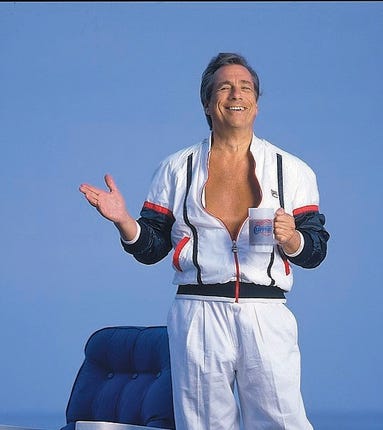
Longtime Clippers owner Donald Sterling, shown in 2010, has been banned by the NBA. Flip through this gallery for more of Sterling. Longtime Clippers owner Donald Sterling, shown in 2010, has been banned by the NBA. Flip through this gallery for more of Sterling.  Mark J. Terrill, APFullscreenSterling and former Los Angeles mayor Tom Bradley pose for a photo in 1987. Sterling and former Los Angeles mayor Tom Bradley pose for a photo in 1987.  Andrew D. Bernstein, NBAE/Getty ImagesFullscreenA portrait of Sterling, who also is a real estate entrepreneur, as he holds a mug and stands near a deck chair in  Malibu, Calif., June 1989. A portrait of Sterling, who also is a real estate entrepreneur, as he holds a mug and stands near a deck chair in Malibu, Calif., June 1989.  Rob Lewine, Time & Life Pictures/Getty ImageFullscreenSterling sits courtside during a game in 2010. Sterling sits courtside during a game in 2010.  Danny Moloshok, APFullscreenSterling and LaLa Vazquez sit next to each other at a Clippers-Nuggets playoff game, where Vazquez's future husband, Carmelo Anthony, starred for Denver. Sterling and LaLa Vazquez sit next to each other at a Clippers-Nuggets playoff game, where Vazquez's future husband, Carmelo Anthony, starred for Denver.  Garrett Ellwood, NBAE/Getty ImagesFullscreenSterling and former GM Elgin Baylor pose after Baylor, who later sued the team for wrongful termination, won the 2005-06 NBA Executive of the Year Award. Sterling and former GM Elgin Baylor pose after Baylor, who later sued the team for wrongful termination, won the 2005-06 NBA Executive of the Year Award.  Andrew D. Bernstein, NBAE/Getty ImagesFullscreenSterling smiles during the first round of the 2012 playoffs, when the Clippers beat the Grizzlies. Sterling smiles during the first round of the 2012 playoffs, when the Clippers beat the Grizzlies.  Jayne Kamin-Oncea, USA TODAY SportsFullscreenSterling and wife Shelly attend a game in November 2013. Sterling and wife Shelly attend a game in November 2013.  Kirby Lee, USA TODAY SportsFullscreenSterling sits courtside at a December 2012 game. Sterling sits courtside at a December 2012 game.  Jayne Kamin-Oncea, USA TODAY SportsFullscreenSterling greets fans during December 2012. Sterling greets fans during December 2012.  Jayne Kamin-Oncea, USA TODAY SportsFullscreenSterling takes in player introductions during the 1997 playoffs, when his team lost to the Jazz. Sterling takes in player introductions during the 1997 playoffs, when his team lost to the Jazz.  Robert Hanashiro, USA TODAY SportsFullscreenSterling has a laugh with former Clippers star Elton Brand in 2001. Sterling has a laugh with former Clippers star Elton Brand in 2001.  Catherine Steenkeste, NBAE/Getty ImagesFullscreenSterling talks with former Clippers star Lamar Odom before a 2000 game. Sterling talks with former Clippers star Lamar Odom before a 2000 game.  Robert Hanashiro, USA TODAY SportsFullscreenSterling and former NBA commissioner David Stern meet with officials before a Clippers 2012 second-round playoff game vs. the Spurs. Sterling and former NBA commissioner David Stern meet with officials before a Clippers 2012 second-round playoff game vs. the Spurs.  Jayne Kamin-Oncea, USA TODAY SportsFullscreenSterling and wife Shelly pose for a photo before a 2012 playoff game. Sterling and wife Shelly pose for a photo before a 2012 playoff game.  Andrew D. Bernstein NBAE/Getty ImagesFullscreenSterling during the 2012 NBA playoffs. Sterling during the 2012 NBA playoffs.  Jayne Kamin-Oncea, USA TODAY SportsFullscreenSterling in Nov. 2012. Sterling in Nov. 2012.  Mark J. Terrill, APFullscreenLike this topic? You may also like these photo galleries:ReplayLongtime Clippers owner Donald Sterling, shown in 2010, has been banned by the NBA. Flip through this gallery for more of Sterling.Sterling and former Los Angeles mayor Tom Bradley pose for a photo in 1987.A portrait of Sterling, who also is a real estate entrepreneur, as he holds a mug and stands near a deck chair in  Malibu, Calif., June 1989.Sterling sits courtside during a game in 2010.Sterling and LaLa Vazquez sit next to each other at a Clippers-Nuggets playoff game, where Vazquez's future husband, Carmelo Anthony, starred for !   Denver.Sterling and former GM Elgin Baylor pose after Baylor, who later sued the team for wrongful termination, won the 2005-06 NBA Executive of the Year Award.Sterling smiles during the first round of the 2012 playoffs, when the Clippers beat the Grizzlies.Sterling and wife Shelly attend a game in November 2013.Sterling sits courtside at a December 2012 game.Sterling greets fans during December 2012.Sterling takes in player introductions during the 1997 playoffs, when his team lost!    to the J!   azz.Sterling has a laugh with former Clippers star Elton Brand in 2001.Sterling talks with former Clippers star Lamar Odom before a 2000 game.Sterling and former NBA commissioner David Stern meet with officials before a Clippers 2012 second-round playoff game vs. the Spurs.Sterling and wife Shelly pose for a photo before a 2012 playoff game.Sterling during the 2012 NBA playoffs.Sterling in Nov. 2012.A! utoplayShow ThumbnailsShow CaptionsLast SlideNext Slide
Wednesday’s Analyst Moves: Apple Inc., Hillshire Brands Co, Intel Corporation, More (AAPL, HSH, INTC, More)

Before Wednesday's opening bell, a number of big name dividend stocks were the subject of analyst moves. Below, we highlight the important analyst commentary for investors.

The Andersons Upgraded to “Outperform”

The Andersons, Inc. (ANDE) has been upgraded to “Outperform” at BMO Capital. The firm has a $56 price target on ANDE, suggesting a 21% upside from Tuesday’s closing price of $46.39. ANDE has a dividend yield of 0.95%.

Hillshire Brands Downgraded at Two Firms

Hillshire Brands Co (HSH) has been downgraded to “Market Perform” at BMO Capital on a valuation call. The firm has a $49 price target on HSH, suggesting a 9% upside from Tuesday’s closing price of $45.19.

Gabelli has

Iron Mountain: REIT Conversion Not Dead Yet, Piper Jaffray Says

How’s this for an ugly chart?

That’s a 52-week chart of Iron Mountain (IRM), and that big decline–and gap–you see is what happens when investors have their hearts set on seeing a company convert into a REIT only to have their hearts broken by the IRS.

Whether a company can convert into a REIT is dependent on the definition of “real assets,” and when the IRS announced in June that it had put together a working group to figure define just what a real asset is, investors freaked. In case you’re wondering, that’s a 35% drop from peak to trough.

But there may be hope yet, say Piper Jaffray analysts George Tong and Peter Appert. First, they note that the IRS’s decision to convene a working group does not mean that it’s eager to change the definition, but rather to formalize it. They also believe there’s a good chance that Iron Mountain’s storage racks will be deemed “real assets.” For instance, Iron Mountain’s assets are likely to meet the IRS’s definition of “permanence.” Tong and Appert write:

IRM’s racks consist of beams permanently affixed to the foundation of the building capable of withstanding significant weight over many decades. They are not modular in nature, such as grocery aisle shelves (which do not qualify as real assets) that can be taken apart and pieced back together. The racks are never meant to be moved nor have they ever been moved. Removing the racks at IRM will immediately turn them into scrap metal since they cannot be reused. This is because the racks are custom built for each unique building and blueprint, taking into account structural and physical idiosyncrasies, and because of warping that occurs with time.

They also do not believe that the racks will be determined to be deemed “[accessories] to the operation of a business,” because they “do not produce a product” and “are not equipment or machinery,” among other reasons. As a result, they believe that Iron Mountain’s racks will be “treated as qualifying real assets in a REIT conversion,” and they reiterated their $37 dollar price target for the stock.

The biggest downside might be time. Tong and Appert say that a “resolution may take over a year,” but should be issued by the end of next year.

Iron Mountain has gained 2.6% to $26.55 at 3:05 p.m., making it the fourth-best performer in the S&P 500, ahead of WPX Energy (WPX), which has gained 2.4% to $19.94, Pinnacle West Capital (PNW), which has gained 2.3% to $53.55 and Dominion Resources (D), which has risen 2.1% to $59.85.

Tuesday, May 27, 2014

Biggest auto recalls ever

5 most notorious auto recalls   5 most notorious auto recalls NEW YORK (CNNMoney) There's no question General Motors' 2014 recalls involve a huge number of cars. But even its largest recall this year -- of 2.6 million vehicles for a flaw connected to at least 13 deaths -- doesn't stack up to the biggest in history.

That distinction is held by Ford Motor, which in 1980 recalled 21 million vehicles from 10 model years for a problem that caused some vehicles to slip from park into reverse.

Do you think GM cars safe?

Records show Ford's solution for that problem, which investigators linked to 6,000 accidents and nearly 100 deaths, was to send drivers a warning sticker to put on the dashboard.

So far this year, General Motors (GM, Fortune 500) has recalled a total of 15.6 million vehicles worldwide. The total includes 2.6 million with an ignition switch flaw that can cause the vehicles to unexpectedly shut off and disable safety features.

The ignition switch recall is among the deadliest in recent years, and federal regulators say they believe additional fatalities will be connected to the flaw as the investigation continues.

None of its 30 recalls this year make the top 10, but GM does have four spots on the list, according to National Highway Traffic Safety Administration records:

2. Ford (F, Fortune 500) holds both the top spot and No. 2. In 1996, it recalled 7.9 million vehicles and replaced ignition switches, which could short circuit and cause a fire in the steering column.

3. General Motors' largest recall comes in at No. 3 on the NHTSA list. Investigators found over a dozen 1960s and 1970s models had faulty engine mounts that could cause the vehicle to accelerate unexpectedly. GM recalled 6.7 million cars and trucks and installed a restraining device to hold the engine in place.

4. GM's second-largest recall was for a suspension issue affecting 5.8 million vehicles from the late 1970s. The control arm, a critical part of the suspension that attaches the rear axle to the vehicle, could detach and the driver could lose control of the car.

5. In 2005, Ford recalled 4.5 million vehicles that could catch fire. It said the speed control feature could overheat, and while it prepared replacement parts, urged drivers to have the feature disconnected. Four years later, Ford issued a second speed control recall on a different batch of vehicles. That recall also totaled 4.5 million cars.

6. Toyota's unintended acceleration re! call totaled 4.4 million vehicles. It was started in 2009, but it has continued to haunt the automaker. Earlier this year, Toyota settled for $1.2 billion a federal investigation by admitting it misled investigators.

1970 ford recall

Twenty one million vehicles came off Ford production lines in the 1970s and 1980s with a safety defect.

7. In 1972, Ford recalled 4 million cars with faulty seat belts. It said the belt could detach from the buckle.

8. GM recalled just over 3.7 million early 1970s vehicles for an undercarriage design flaw. Small stones could get lodged in the steering apparatus and make it more difficult to steer the car, GM said.

9. Volkswagen and Honda each issued recalls for 3.7 million vehicles. In 1972, Volkswagen recalled 20 years of cars because a loose screw meant the windshield wipers could stop working. Honda recalled its cars in 1995 when a major seat belt manufacturer found design flaws that meant the buckle could crack.

10. In 2004, General Motors recalled more than 3.6 million trucks because cables holding the tailgate could snap. This meant someone standing or sitting on the tailgate could fall and be injured. To top of page